Downloads
Keywords:
Predicting Student Dropout Risk Through Machine Learning Analysis of Behavioral Patterns
Authors
Abstract
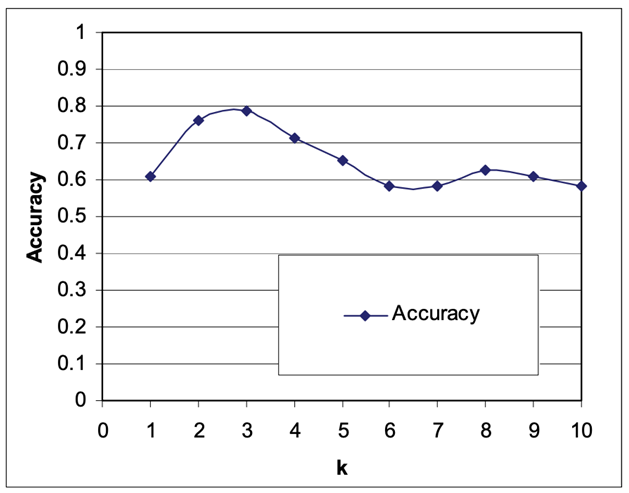
Student dropout remains a critical challenge in higher education institutions worldwide, affecting not only individual academic trajectories but also institutional effectiveness and societal development. This research investigates the application of Machine Learning (ML) techniques to predict student dropout risk by analyzing behavioral patterns extracted from Learning Management System (LMS) data. The study synthesizes contemporary research findings and explores how digital traces of student engagement, combined with academic and demographic data, can facilitate early identification of at-risk students. By examining various ML algorithms including k-Nearest Neighbors (k-NN), Neural Networks (NN), Decision Trees (DT), and Naive Bayes (NB), this research demonstrates that behavioral pattern analysis significantly enhances prediction accuracy compared to traditional statistical methods. Empirical validation reveals that k-NN with k=3 achieves optimal performance with 87% sensitivity, while feature correlation analysis identifies strong relationships between test performance, project completion, and final result points. The findings reveal that LMS activity metrics, particularly access frequency, test engagement, and assignment submission behaviors, serve as strong indicators of dropout risk when combined with academic performance data. Furthermore, ROC curve analysis demonstrates that ensemble approaches and optimized k-NN classifiers substantially outperform baseline methods in distinguishing dropout-prone students from persisters. The research contributes to the growing body of knowledge in educational data mining by providing a comprehensive framework for integrating behavioral analytics into institutional retention strategies, ultimately supporting data-driven decision-making for improved student success outcomes.
Article Details
Published
Issue
Section
License

This work is licensed under a Creative Commons Attribution-NonCommercial-ShareAlike 4.0 International License.